Red Wine Floats — How Liquid Density Creates Stunning Cocktails
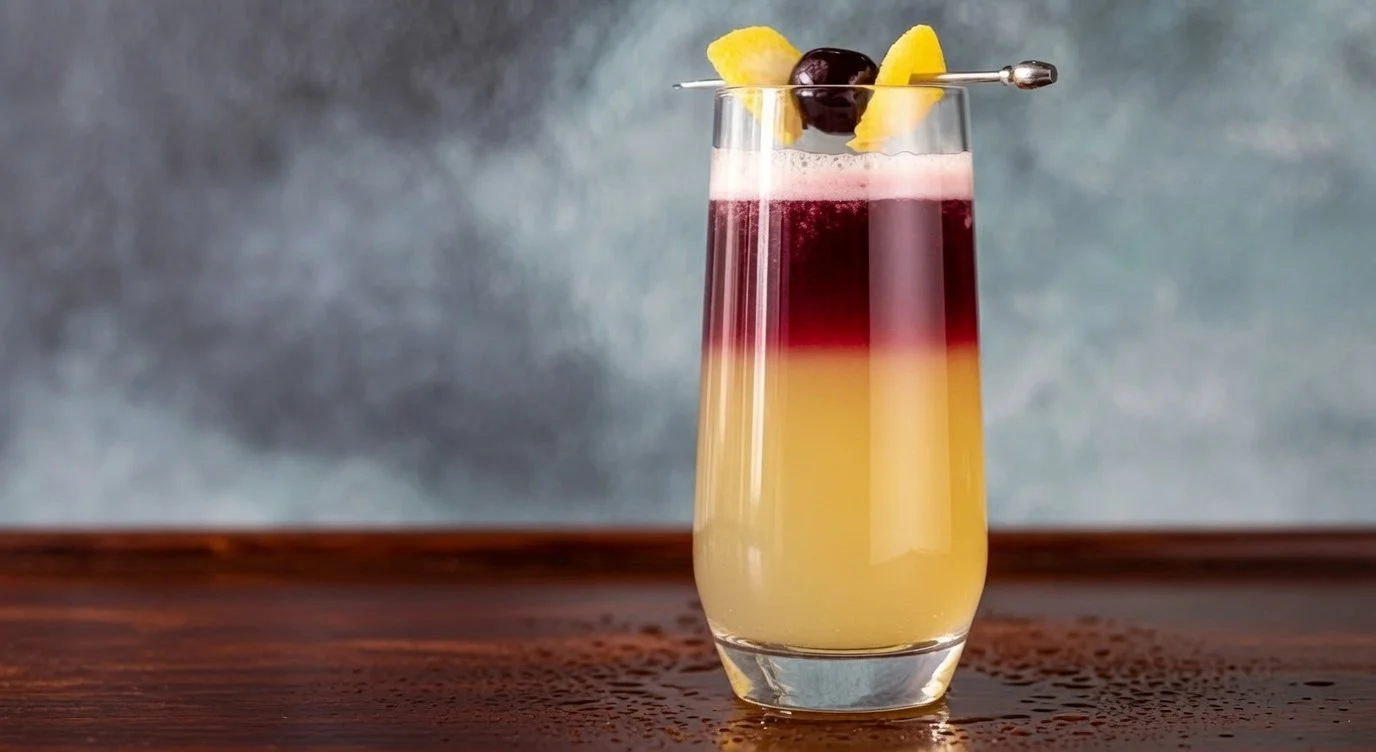
One of the first things I demonstrate in a bar training session is the red wine float. I pour a simple base cocktail into a glass and then slowly pour red wine over the back of a spoon so it sits on top in a deep crimson layer. Every time I do this, the reaction is the same. The staff lean in. They want to know how it works and how to do it themselves. It is one of the most visually striking techniques in bartending, and it is entirely based on a simple principle of physics.
Why It Works
Liquids have different densities, and denser liquids sink while lighter liquids float. The key to a successful red wine float is the sugar content of the base cocktail. Sugar is dense. A cocktail that contains simple syrup, citrus juice, and a spirit has a relatively high density compared to red wine. When you pour the red wine slowly over the back of a spoon, it sits on top of that denser base because the wine is lighter.
The technique breaks down when the base cocktail does not have enough sugar. I watched a bartender attempt a red wine float on a tequila drink that had very little citrus and no simple syrup. The wine sank immediately because there was nothing dense enough to support it. We added lemon, lime, and simple syrup to the base and the float worked beautifully on the second attempt.
The Presentation Value
A red wine float is not just a technique, it is a presentation tool. A cocktail that arrives at the table with a deep red layer sitting perfectly on top of a lighter colored base gets noticed. It gets photographed. In an era when guests share food and drink photos constantly, a visually striking cocktail is free marketing every time someone posts it.
This is exactly the kind of detail that elevates a cocktail program from functional to memorable. And in markets like Litchfield County where guests come specifically for an experience, memorable details are what bring people back and generate the word of mouth that fills tables on a Saturday night.
Teaching the Technique
The pour technique is simple once you understand the principle. Hold a spoon just above the surface of the cocktail with the back of the spoon facing up. Pour the wine slowly over the back of the spoon so it disperses gently across the surface rather than plunging straight down. The slower and more controlled the pour, the cleaner the float will be.
I always teach this alongside the broader lesson about liquid density because staff who understand why it works can troubleshoot it themselves when it does not go right. That understanding is the goal of every bar training session I run. Not just what to do, but why it works.
Adding It to Your Menu
If your cocktail menu does not include at least one float technique, you are leaving a presentation opportunity on the table. A well-executed float adds perceived value to a cocktail without adding significant cost. It justifies a higher price point and creates a talking point for your servers when they describe the menu.
At 5 Loaves Restaurant Consulting, we develop complete cocktail programs for Connecticut restaurants that include signature techniques, recipes, costing, and staff training. We build programs that are both executable and profitable.
Contact us to discuss your cocktail program.
5 Loaves Restaurant Consulting serves restaurants across Connecticut including Torrington, Hartford, New Haven, Waterbury, Litchfield County and surrounding areas.